Family Caregiver Discrimination, also called Family Responsibilities Discrimination (FRD), is employment discrimination against workers who are responsible for providing care for a family member.
Print and share WorkLife Law’s Family Caregiver Discrimination Fact Sheet.
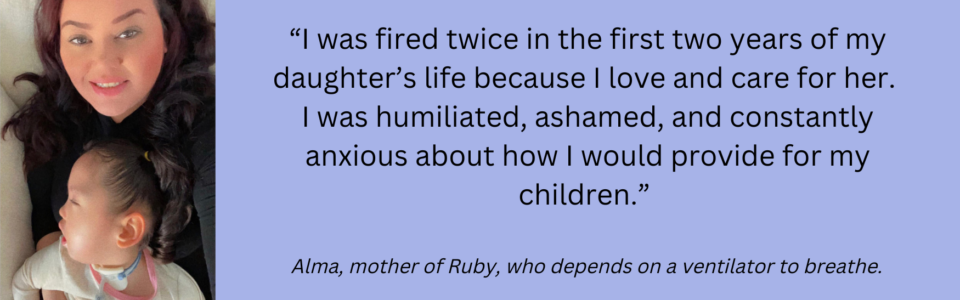

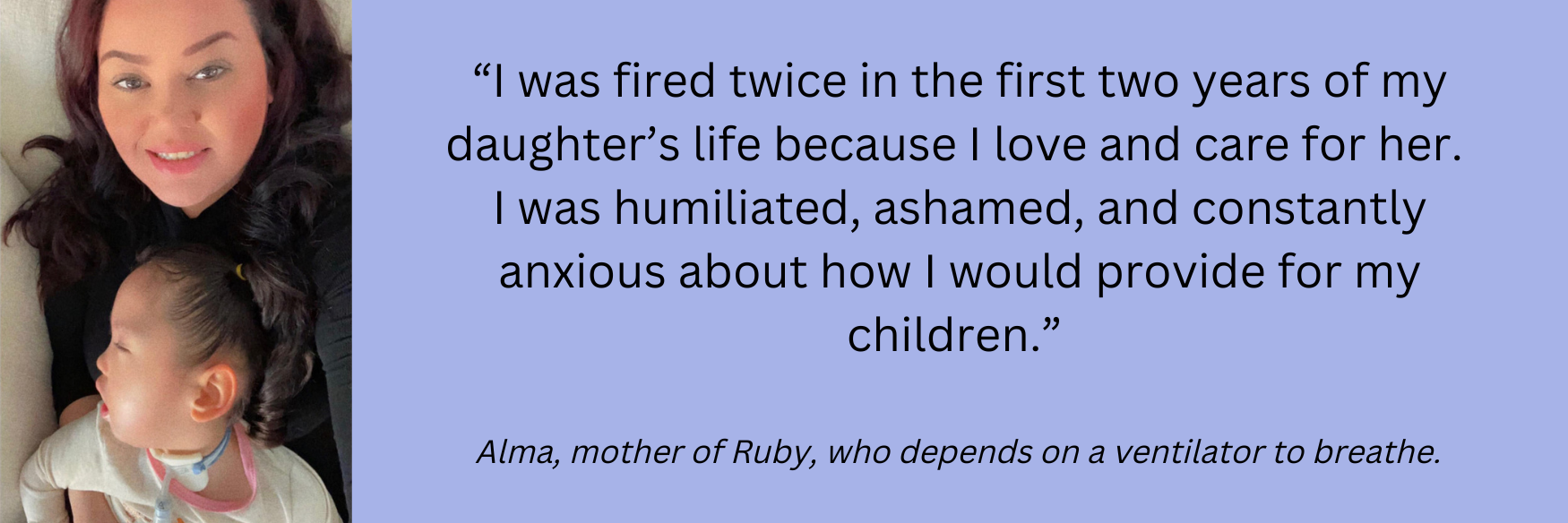
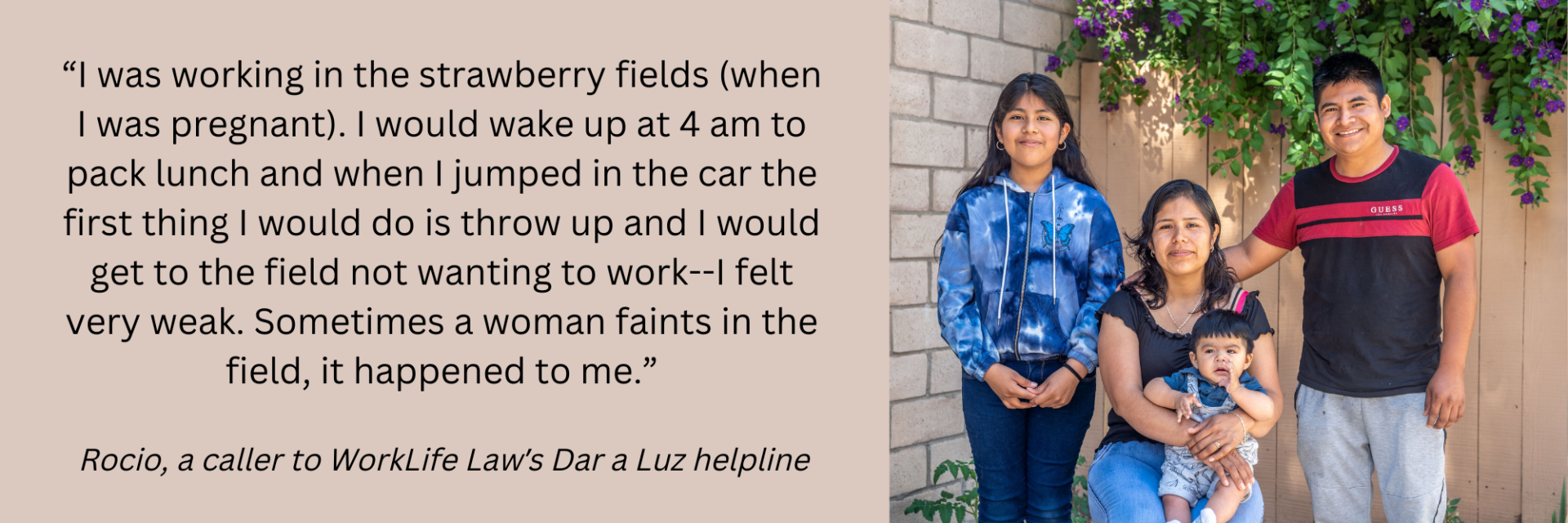
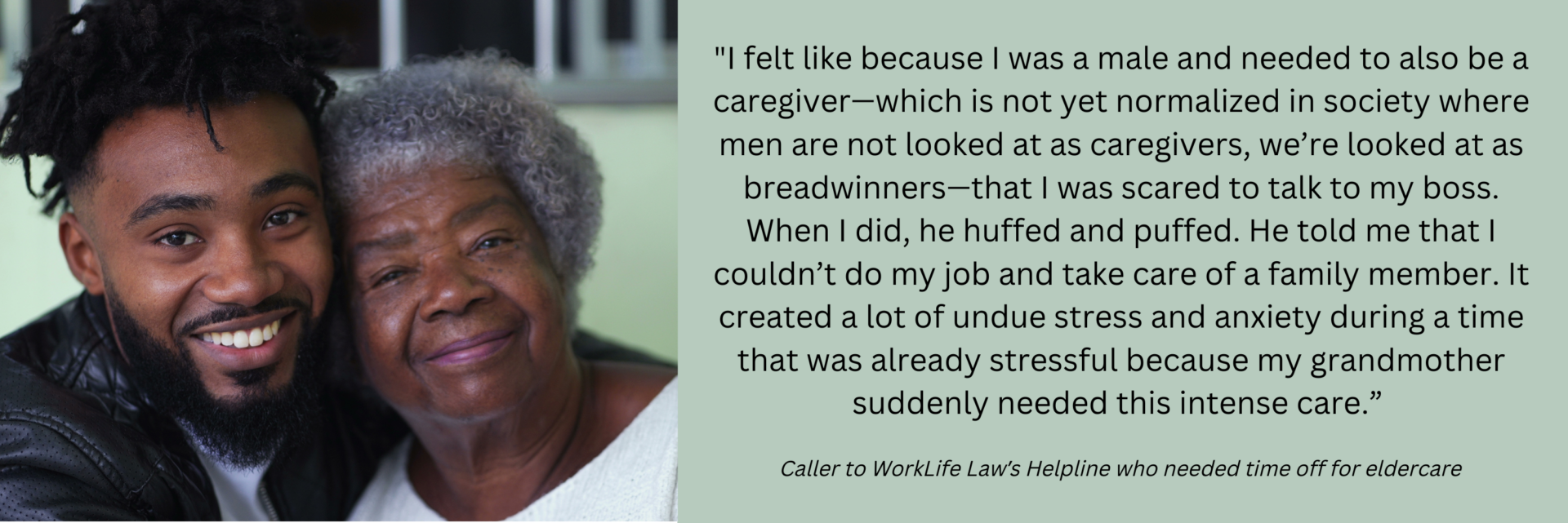

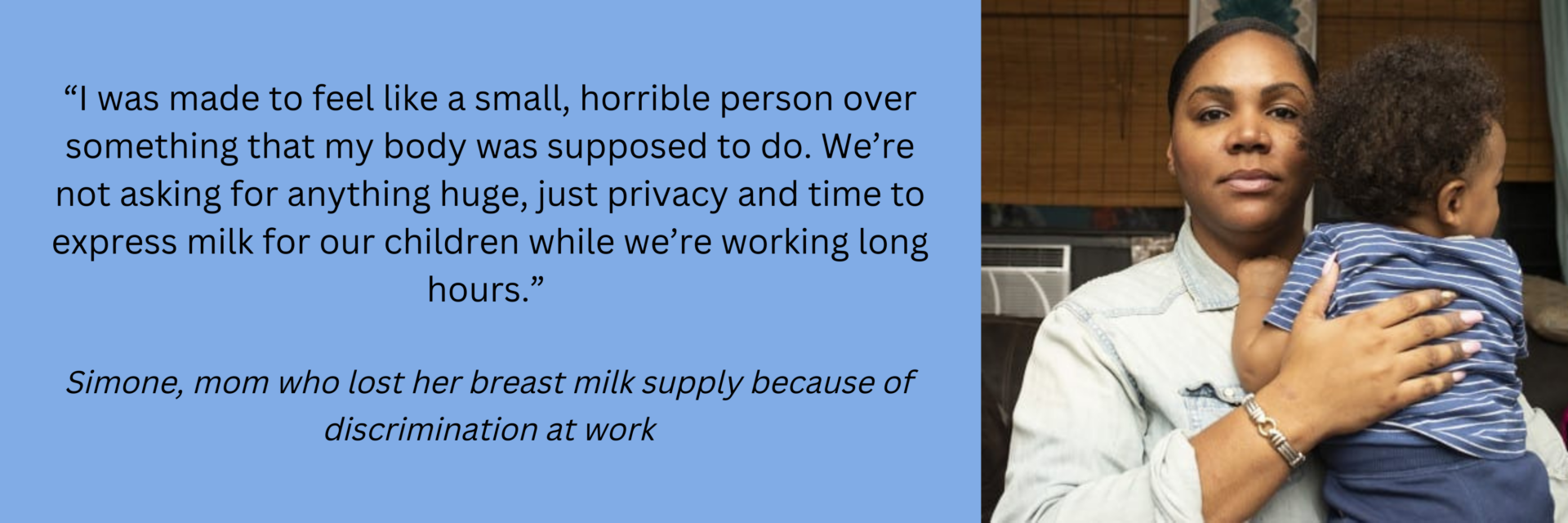

Workers with family caregiving responsibilities include parents, pregnant or nursing people, and those caring for aging or disabled family members. Too often family caregivers face discrimination at work because employers make decisions based on stereotypes about sex, gender, and race, and assumptions that family caregivers will underperform. Despite good performance, family caregivers who experience FRD may be fired, rejected for hire, passed over for promotion, demoted, and harassed. Unfortunately, Family Responsibilities Discrimination remains legal in many cases.
Discrimination against family caregivers is remarkably common in the United States and has devastating economic and health consequences. While caregiver discrimination impacts people of all genders, races, and socioeconomic levels, it disproportionately impacts women, people of color, and low-wage workers. For example, research shows that the gender pay gap is largely attributable to motherhood, and that this “motherhood penalty” is most severe for low-income women.
Combatting caregiver discrimination is critical to the Center for WorkLife Law’s mission of advancing gender, racial, and socioeconomic justice. For decades, The Center for WorkLife Law has been a leader in the field, using the power of the law to ensure no one is forced to choose between caring for their loved ones and keeping the paying job they need to survive.
Keep reading to learn more about what FRD looks like, the laws that protect family caregivers, and resources to promote policy change. If you believe you have experienced discrimination and need help, contact us here.
Learn More about Caregiver Discrimination
- close all
What laws protect family caregivers?
Nearly 30% of U.S. workers are protected by state and local laws against family responsibilities discrimination in the workplace. Other federal laws also protect many family caregivers nationwide.
Read our summary of local, state, and federal laws that protect family caregivers here.
What does caregiver discrimination look like?
- A supervisor demotes a pregnant employee because he fears she won’t be committed to the work after becoming a mom;
- A dad is fired when he returns from paternity leave because his boss believes that men should prioritize work over newborn care;
- Managers block an employee from taking lactation breaks while allowing other employees to take smoke breaks as needed;
- A parent with postpartum depression is told by HR that they can’t take leave to recover, while letting a colleague take leave after a heart attack;
- A supervisor refuses to promote the most qualified employee–a mother–due to an assumption that she wouldn’t want to take work trips away from her children;
- The hiring team ghosts a job applicant who mentions that their spouse has a disability out of fear the family will cost more to insure;
- An employee whose elderly and ill mother just moved in with him is fired by his supervisor based on the assumption that he will miss a lot of work; and,
- Management invents or exaggerates infractions or performance problems to justify firing employees with family responsibilities.
Tools for Change
- close all
Public Policy
- Family Caregiver Discrimination Fact Sheet
- List of Existing Laws Protecting Family Caregivers at Work
- Model Language for State & Local FRD Laws
- Clarification or Complaints? The Impact of Family Responsibilities Discrimination Laws on State Enforcement Agencies (2022)
- Litigation or Clarification? The Impact of Family Responsibilities Discrimination Laws (2021)
- Protecting Parents During COVID-19: State and Local Laws Prohibit Discrimination at Work (2020)
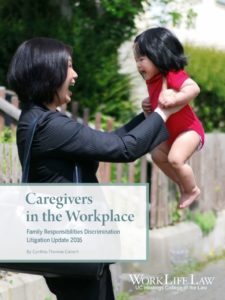
- Caregivers in the Workplace Information on family responsibilities discrimination litigation trends (2016)
If you are a policymaker or advocate seeking assistance, please contact us at policy@worklifelaw.org.
Workplace Policies
I’ve experienced discrimination. Where do I go for help?
If you or someone you know may have experienced discrimination because of family caregiving, pregnancy, or lactation, or to learn more about your legal rights, contact our free legal helpline.
- Email hotline@worklifelaw.org
- Call 415-703-8276 and leave a message with your phone number. We will call you back.
- Fill out the form at the bottom of the page: https://worklifelaw.org/get-help/
Related Publications